Why HVAC Costs Spiked in 2026: Tariffs, Materials, and Market Data
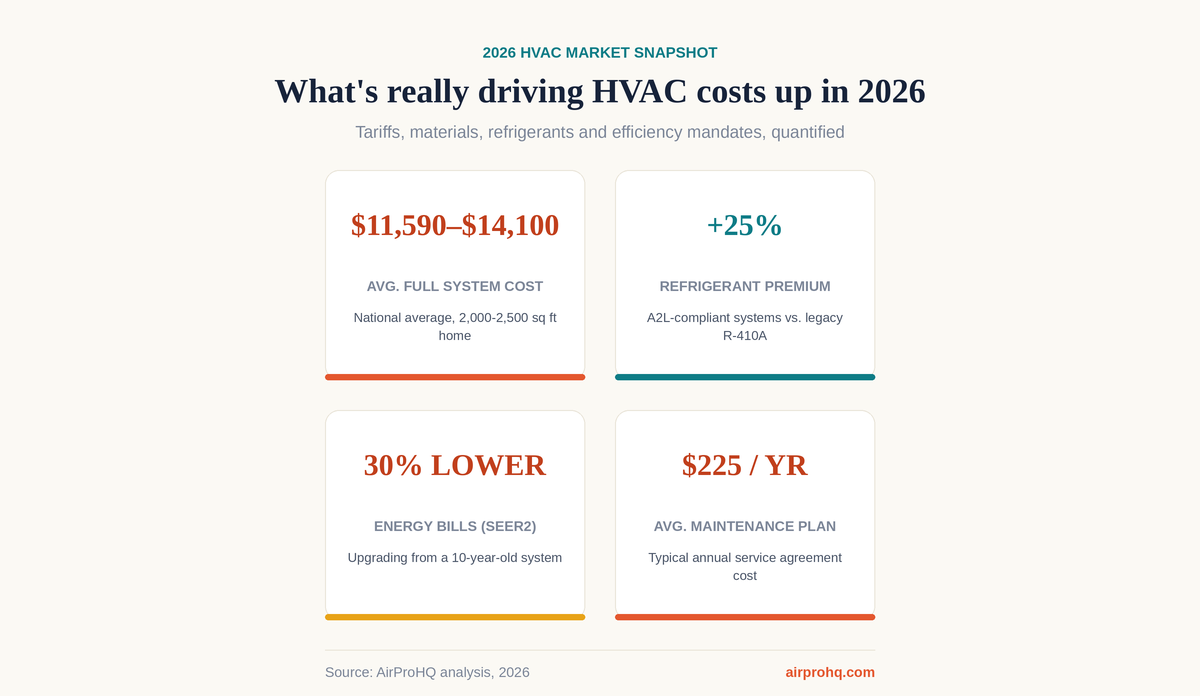
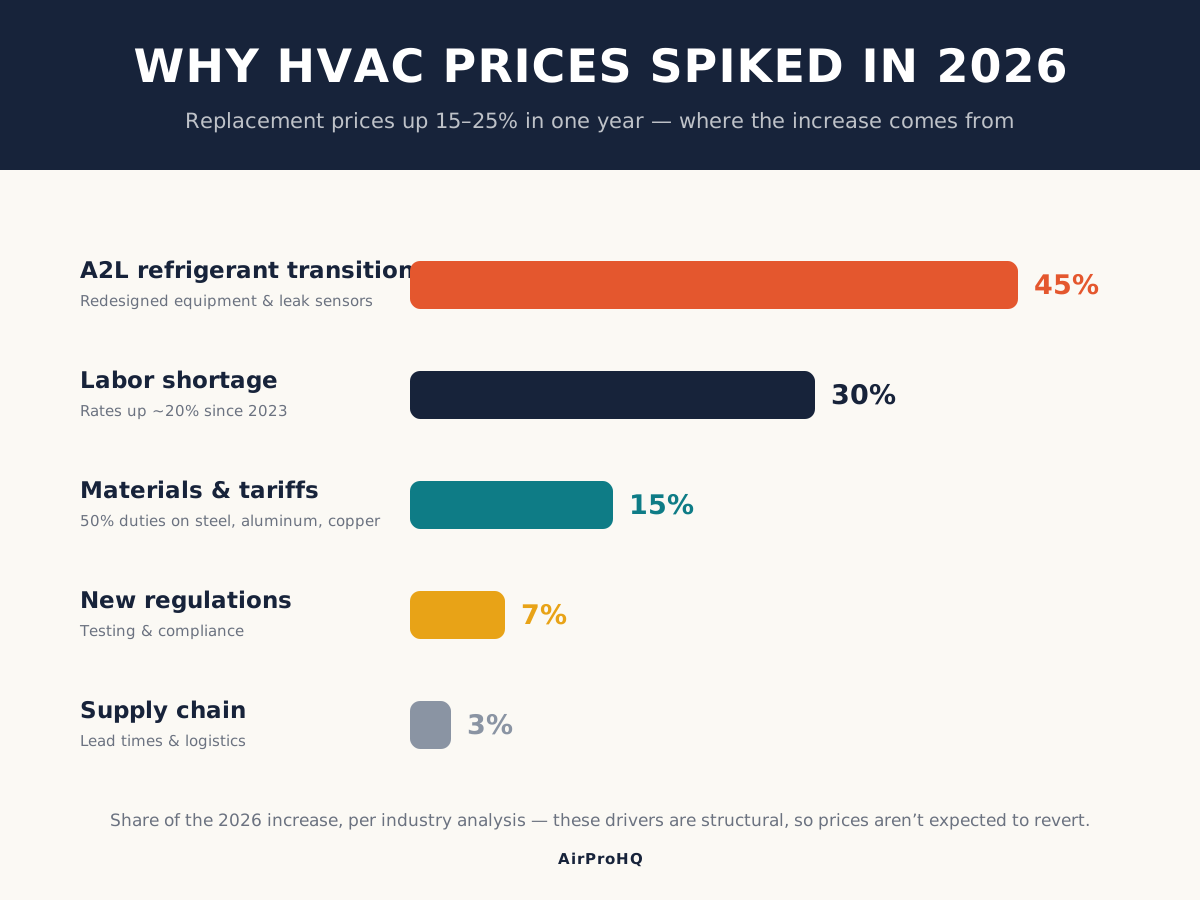
HVAC replacement prices are up roughly 15–25% in 2026. The biggest drivers: the A2L refrigerant transition (redesigned equipment costs 15–30% more), expanded Section 232 tariffs of up to 50% on steel, aluminum, and copper — now applied to the full value of imported equipment rather than just its metal content — manufacturer list-price increases of up to 8%, and a technician shortage that has pushed labor rates up about 20% since 2023.
| Driver | Approx. share of increase | What it hits |
|---|---|---|
| A2L refrigerant transition | ~45% | Equipment redesign, sensors, coil compatibility |
| Labor shortage | ~30% | Installation and repair labor rates |
| Materials & tariffs | ~15% | Copper coils, steel cabinets, aluminum fins |
| New regulations | ~7% | Testing, compliance, certification |
| Supply chain | ~3% | Lead times and logistics |
The tariff picture
Section 232 tariffs on steel, aluminum, and copper were restructured in April 2026, and the change hits HVAC harder than the headline rate suggests. Tariffs of up to 50% now apply to products made substantially of those metals — and critically, they now apply to the full customs value of imported derivative products, where previously only the metal content was tariffed.
HVAC equipment is extremely metal-intensive: compressors, coils, cabinets, heat exchangers, and line sets. Most imported equipment now carries an effective flat tariff of around 25% on its full value, and even American-assembled units use imported compressors, motors, and raw metal.
Materials: copper is the pressure point
Copper dominates refrigerant lines and coils because nothing matches its heat-transfer properties at the price, while steel and aluminum make up cabinets, ductwork, and fins. Carrier alone has cited a roughly $60 million headwind from copper, steel, and aluminum costs — and has raised list prices by up to 8% for 2026, with other major manufacturers making similar moves.
Those manufacturer increases land on top of distributor and contractor margins, which is how a single-digit list-price bump becomes a noticeably larger installed-price change.
The A2L transition premium
Since January 2026, new residential equipment must use refrigerants with a global warming potential of 700 or less — R-454B or R-32 in practice, with R-410A barred from new equipment. The mildly flammable A2L classification forced a redesign: new coils, new controls, and built-in leak-detection sensors.
That redesign is the single largest contributor to the 2026 spike — the 15–30% equipment cost increase we track in our component lifespan guide, and roughly 45% of the total price rise by one industry analysis. Our A2L and incentives guide covers what the transition means for your specific purchase.
Labor: the quiet multiplier
Labor is 40–60% of a typical invoice, and rates are up roughly 20% since 2023 as technician retirements outpace new entrants. Demand is compounding the shortage: 2026 is projected to be a record replacement year — about 3.5 million units — as systems installed during the 2005–2007 housing boom reach the end of their service life at once.
More demand chasing fewer technicians means higher rates and longer waits, especially at the summer peak.
What homeowners can actually do
- Schedule in the shoulder seasons. Spring and fall remain the most reliable discount — contractor demand drops between the heating and cooling peaks.
- Get three itemized quotes. With equipment prices moving fast, itemization exposes whether a high quote reflects hardware costs or opportunistic markup — see our contractor hiring guide.
- Repair strategically. The 50% rule still applies, but run it with current replacement prices, not 2020 memories — our AC repair cost guide has the worked math.
- Check rebates before you buy. The federal tax credits are gone, but HEAR and state rebates can still take thousands off for qualifying households.
- Don't panic-buy premium tiers. A mid-tier unit sized and installed correctly beats an oversized premium one — our SEER2 savings guide shows where the efficiency premium actually pays back.
Waiting for prices to fall is not a strategy in this market: the tariff structure and A2L refrigerant standards are regulatory, not cyclical, so analysts do not expect 2026 pricing to revert. If your system is past 12 years old, budgeting for replacement now beats being forced into an emergency purchase at peak-season rates.
Frequently asked questions
Will HVAC prices go back down in 2027?
Unlikely. The main drivers — tariffs, A2L equipment standards, and the technician shortage — are structural rather than temporary. Most industry forecasts expect prices to keep rising modestly, not fall.
Are repairs more expensive in 2026 too?
Yes. Labor rates are up about 20% since 2023, and refrigerant costs are rising as R-410A is phased down. See our AC repair cost guide for current repair pricing.
Did tariffs raise prices on American-made equipment?
Yes. Domestic manufacturers buy imported compressors, motors, and raw steel, aluminum, and copper — all tariffed — and domestic metal producers raised prices toward the tariffed import price. No brand is insulated.
Should I repair my old system to wait out the price spike?
Only if the repair passes the 50% rule. Because prices are not expected to revert, deferring a failing system usually means paying today's repair bill and tomorrow's replacement price anyway — plus emergency premiums if it dies in July.
Ready to get quotes?
Find rated HVAC contractors near you and compare a few before you commit.
Find a local pro →