SEER2 Ratings Explained: Real Energy Savings by Efficiency Tier
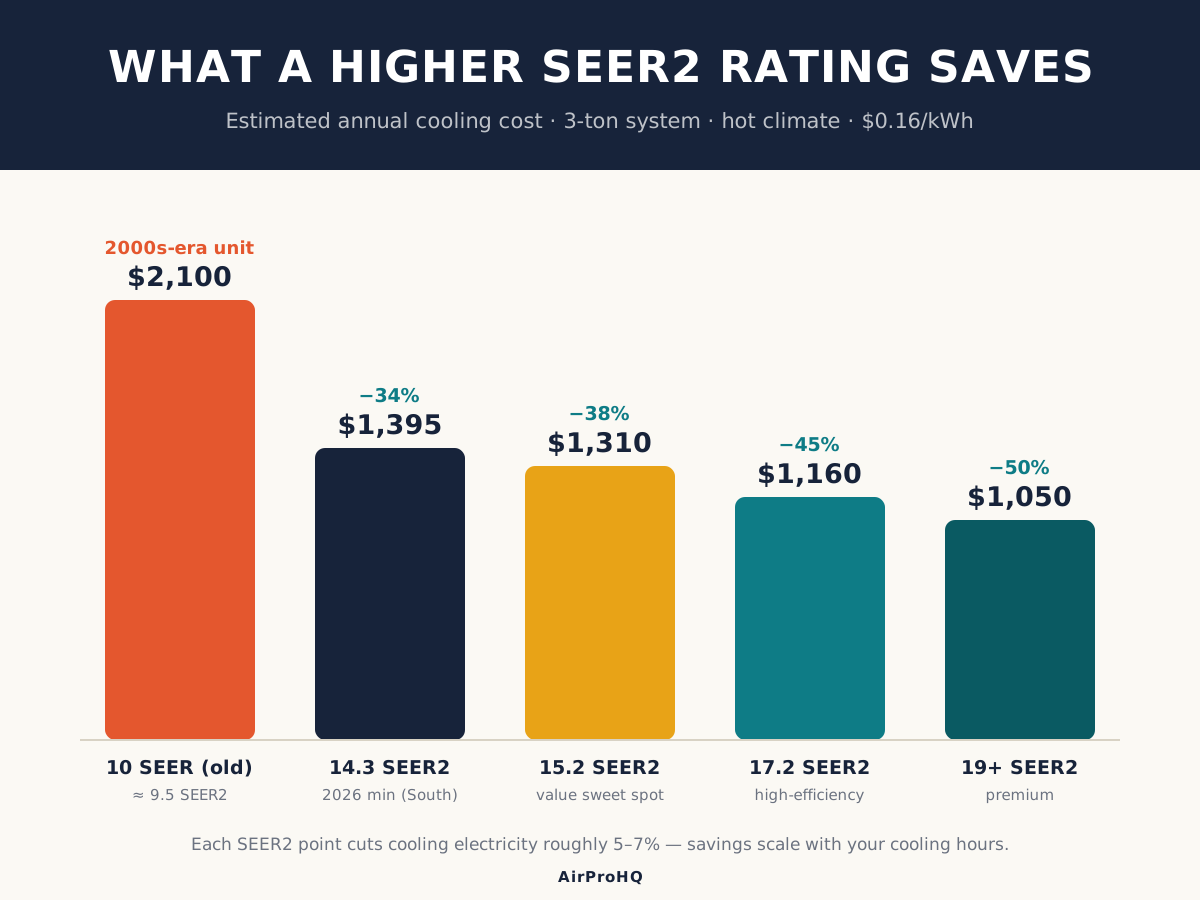
Each 1-point SEER2 improvement cuts cooling electricity use roughly 5–7%. Moving from 14.3 to 18 SEER2 typically saves 20–25% on annual cooling costs, and replacing an old 10 SEER unit with a modern 15–17 SEER2 system can cut cooling bills 30–50% in hot climates. The 2026 federal minimum is 13.4 SEER2 in the North and 14.3 SEER2 in the South and Southwest.
| Old SEER rating | Approx. SEER2 | 2026 status |
|---|---|---|
| 10 SEER (2000s-era unit) | ≈ 9.5 | Far below minimum — prime replacement candidate |
| 13 SEER | ≈ 12.4 | Below 2026 minimum |
| 14 SEER | ≈ 13.4 | Federal minimum — North |
| 15 SEER | ≈ 14.3 | Federal minimum — South & Southwest |
| 16 SEER | ≈ 15.2 | Mid-tier value sweet spot |
| 18 SEER | ≈ 17.2 | High-efficiency |
| 20+ SEER | ≈ 19+ | Premium variable-speed |
What changed from SEER to SEER2
SEER2 replaced SEER in 2023 with a tougher test: the M1 procedure runs equipment against higher external static pressure to mimic real ductwork instead of laboratory conditions. The same physical unit scores roughly 4.5% lower under SEER2 than under old SEER.
That matters when comparing quotes or your old unit's label — a "16 SEER" system from 2019 and a "15.2 SEER2" system today are approximately the same efficiency. Always compare SEER2 to SEER2.
How much each efficiency tier actually saves
The working rule: every 1 point of SEER2 improvement saves roughly 5–7% on cooling electricity. Jumping from 14.3 to 18 SEER2 typically trims 20–25% off annual cooling costs.
The gains are biggest when replacing genuinely old equipment. A 3-ton system running 1,500 cooling hours a year at $0.16/kWh saves roughly 1,850 kWh annually going from 10 SEER to 15.2 SEER2 — about $300 a year, before counting the efficiency loss an aging unit accumulates on top of its rated figure.
Returns diminish at the top: in a hot climate, stepping from 14.3 to 18 SEER2 might save around $200 a year, while the same 4-point step from 18 to 22 SEER2 adds only about $145 more. The premium tiers are bought for comfort features as much as for the utility bill.
Climate changes the math
SEER2 savings scale directly with how many hours your system runs. A Gulf Coast home cooling 2,000+ hours a year recoups a high-efficiency premium quickly; a New England home cooling 600 hours may never recoup it before the system ages out.
Hot-climate homeowners replacing a 2000s-era unit see the 30–50% bill reductions cited in our component lifespan guide; short-season homeowners are usually better served by a minimum-efficiency unit and a good install.
Where higher SEER2 is — and isn't — worth paying for
- Worth it: long cooling seasons (South, Southwest, Gulf Coast), high electricity rates, humid climates where variable-speed units also control moisture better, and homes where the system will run 12+ more years.
- Usually not worth it: short northern cooling seasons, systems near end of life elsewhere (duct leaks negate efficiency gains), or stretching the budget for a premium tier when a mid-tier 15.2 SEER2 unit hits the value sweet spot.
- Remember the incentive landscape: the federal 25C efficiency credit expired at the end of 2025, so high-SEER2 premiums must now pay for themselves through bills and any state or HEAR rebates you qualify for.
- Get the install right first: an oversized or badly ducted 18 SEER2 system underperforms a correctly installed 15.2 — sizing via Manual J matters more than the sticker, as our contractor guide explains.
If the payback period is comfortably shorter than the system's remaining expected lifespan (12–18 years for a new AC), the upgrade pays for itself — the longer your cooling season, the faster it happens.
Example: a 17.2 SEER2 system costs $1,800 more than the 14.3 SEER2 baseline. In a hot climate with a $1,400/year cooling bill, the ~18% efficiency gain saves about $250/year. $1,800 ÷ $250 = 7.2 years to break even — well inside a 15-year lifespan, so the upgrade wins. On a $500/year northern cooling bill the same math gives 20 years, so it doesn't.
Frequently asked questions
What is a good SEER2 rating in 2026?
14.3–16 SEER2 is the value sweet spot for most homes. Go 17+ if you have a long cooling season, high electricity rates, or want variable-speed comfort and humidity control.
What SEER2 rating is required by law in 2026?
New split-system ACs must be at least 13.4 SEER2 in northern states and 14.3 SEER2 in the South and Southwest. Existing lower-rated systems can keep running — the minimum applies to new equipment.
Does SEER2 apply to heat pumps too?
Yes — SEER2 rates a heat pump's cooling efficiency, while HSPF2 rates its heating efficiency. Compare both numbers when shopping for a heat pump.
Is an 18+ SEER2 unit worth it in a northern state?
Rarely on energy savings alone — a short cooling season means the premium may never pay back. Buy it for comfort features (quieter, better humidity control) if those matter to you, not for the utility bill.
Ready to get quotes?
Find rated HVAC contractors near you and compare a few before you commit.
Find a local pro →