HVAC Tax Credits in 2026: What Ended, What Still Pays, and the A2L Shift
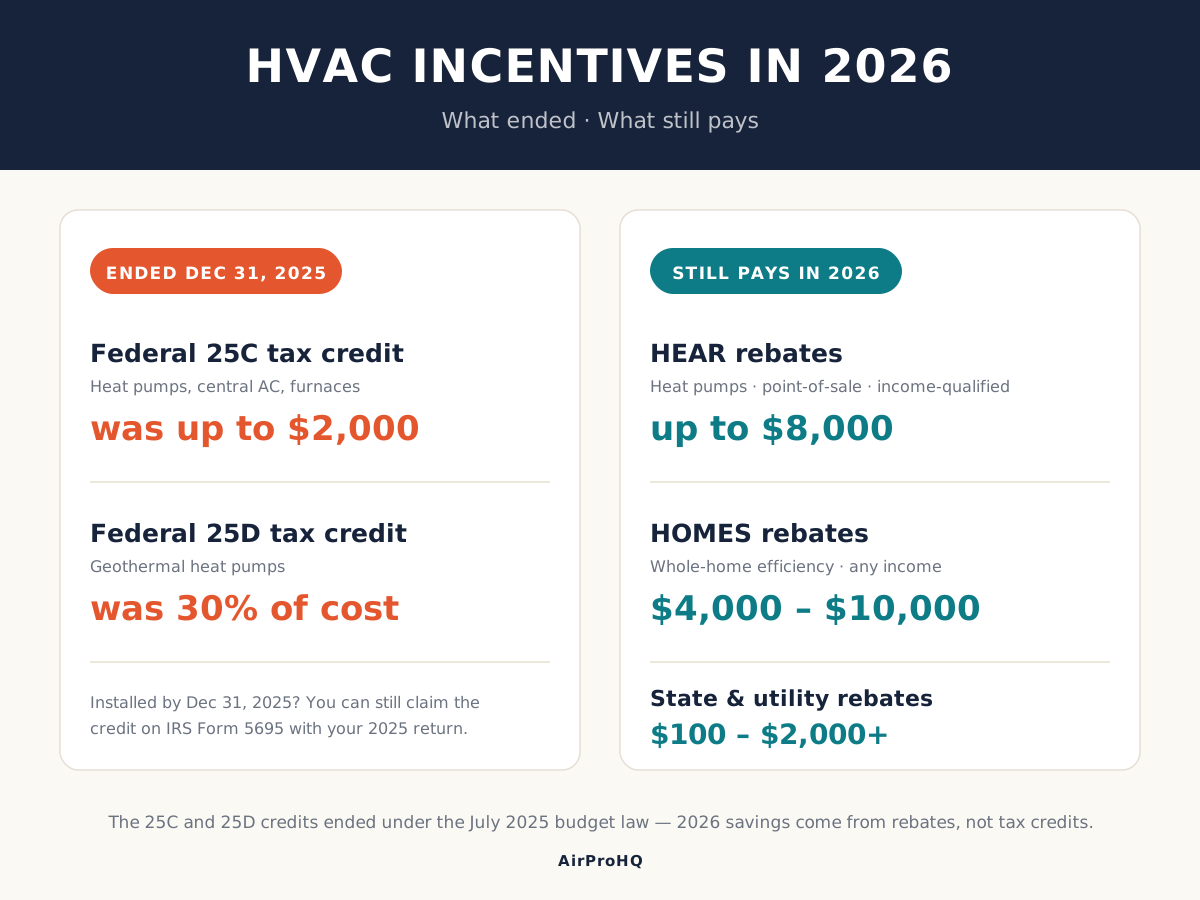
The federal 25C tax credit — worth up to $2,000 on heat pumps and $600 on qualifying ACs and furnaces — expired December 31, 2025, so 2026 installations no longer qualify. What still pays in 2026: income-qualified HEAR rebates of up to $8,000 on heat pumps (point-of-sale, in participating states), HOMES whole-home rebates of $4,000–$10,000, and state and utility programs. Meanwhile, the A2L refrigerant transition has pushed new-equipment prices up 15–30%.
| Program | 2026 status | Potential value |
|---|---|---|
| Federal 25C credit (heat pumps, AC, furnaces) | Expired Dec 31, 2025 | Up to $2,000 — 2025 installs only |
| Federal 25D credit (geothermal) | Expired Dec 31, 2025 | 30% of cost — 2025 installs only |
| HEAR / HEEHRA rebates (income-qualified) | Active in participating states | Up to $8,000 heat pump / $14,000 total |
| HOMES whole-home rebates (any income) | Rolling out state by state | $4,000 – $10,000 |
| State & utility rebates | Varies by location | $100 – $2,000+ |
The federal 25C credit is gone — what that means
For a decade, the Energy Efficient Home Improvement Credit (Section 25C) was the workhorse HVAC incentive: up to $2,000 back on a qualifying heat pump and up to $600 on a high-efficiency AC or furnace. Congress terminated it in the One Big Beautiful Bill Act of July 2025, effective for equipment placed in service after December 31, 2025.
If your system was installed and running by that date, you can still claim the credit on your 2025 federal return using IRS Form 5695. But equipment installed in 2026 does not qualify — and neither does geothermal, which lost its separate 25D credit on the same date.
Be wary of any 2026 sales pitch that leans on "federal tax credits" to close the deal. A contractor quoting you today should be pointing you at rebates, not credits.
What still pays in 2026
The incentive landscape didn't go to zero — it moved from the tax return to the point of sale, and from federal to state administration.
- HEAR rebates (also called HEEHRA): IRA-funded rebates applied as a discount at purchase, worth up to $8,000 on a heat pump for income-qualified households. Households under 80% of Area Median Income get the full amounts (up to $14,000 across all upgrades); between 80% and 150% AMI the rebate is partial; above 150% AMI it is zero. Active in a dozen-plus states so far — check your state energy office.
- HOMES rebates: whole-home efficiency rebates of roughly $4,000–$10,000 available at any income level, based on modeled or measured energy savings. Still rolling out state by state.
- State and utility rebates: many utilities pay $100–$2,000+ for high-efficiency equipment, smart thermostats, or duct sealing, independent of the federal programs. These stack with HEAR in most states.
The A2L refrigerant transition, explained
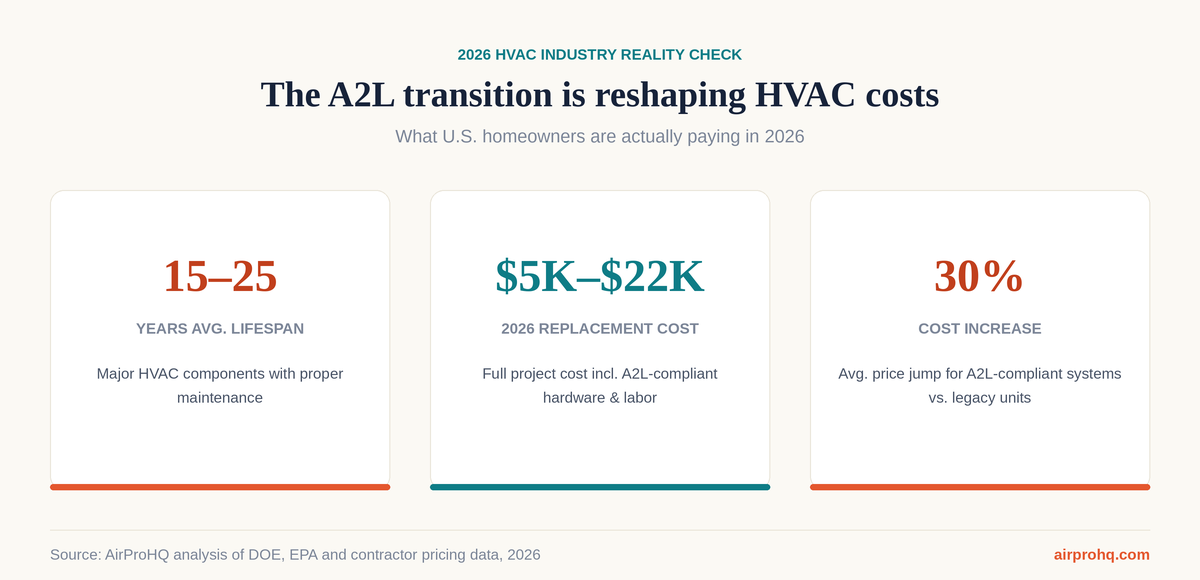
As of January 2026, new residential systems must use refrigerants with a global warming potential of 700 or less — in practice, R-454B or R-32. R-410A is no longer permitted in newly manufactured equipment.
The redesigned equipment — new coils, controls, and built-in leak-detection sensors — has pushed prices up 15–30% over the past three years, as we detail in our component lifespan guide. And compatibility matters: you cannot recharge an older R-410A system with an A2L refrigerant, so a failed outdoor unit on an older system often forces an indoor coil replacement too.
For the full picture of what's driving 2026 pricing — tariffs and labor included — see why HVAC costs spiked in 2026.
How to shop in a post-credit market
- Check HEAR eligibility before you get quotes. If you qualify, the rebate is taken off the invoice at purchase — but only through registered contractors in participating states, so it changes who you should be calling.
- Get at least three itemized quotes. With equipment prices moving, itemization is the only way to see whether you're paying for hardware or markup — our contractor hiring guide covers what to ask.
- Weigh repair against replacement honestly. Without the $2,000 federal credit, the math shifts slightly toward repairing younger systems — run the numbers in our AC repair cost guide.
- Schedule in the shoulder seasons. Spring and fall demand lulls remain the most reliable discount available to every homeowner, regardless of income.
If a contractor's 2026 quote mentions a "federal tax credit," ask them to put the program name in writing. The 25C and 25D credits both ended December 31, 2025 — legitimate savings in 2026 come from HEAR, HOMES, or state and utility rebates, all of which can be verified before you sign.
Frequently asked questions
Is there still a federal HVAC tax credit in 2026?
No. The 25C credit (heat pumps, ACs, furnaces) and the 25D credit (geothermal) both expired December 31, 2025. Equipment installed in 2026 does not qualify for either.
I installed a heat pump in 2025 — can I still claim the credit?
Yes. If the system was placed in service by December 31, 2025, claim it on your 2025 federal return using IRS Form 5695 — up to $2,000 for a qualifying heat pump.
What is the HEAR rebate and do I qualify?
HEAR (Home Electrification and Appliance Rebates, formerly HEEHRA) is an IRA-funded, income-based rebate applied at purchase — up to $8,000 on a heat pump. Households under 80% of Area Median Income get full amounts, 80–150% AMI get partial, and above 150% AMI get nothing. Your state must have launched its program for you to claim it.
Will the federal tax credit come back?
Only if Congress passes new legislation. As of mid-2026 there is no scheduled revival, so plan purchases around the rebate programs that actually exist today.
Does A2L equipment qualify for any special incentive?
There is no federal incentive specific to A2L systems. However, since all new 2026 equipment is A2L-compliant by regulation, any HEAR, HOMES, or utility rebate you qualify for will apply to A2L equipment by default.
Ready to get quotes?
Find rated HVAC contractors near you and compare a few before you commit.
Find a local pro →