AC Repair Cost in 2026: Complete Price Guide by Repair Type, Region, and Age
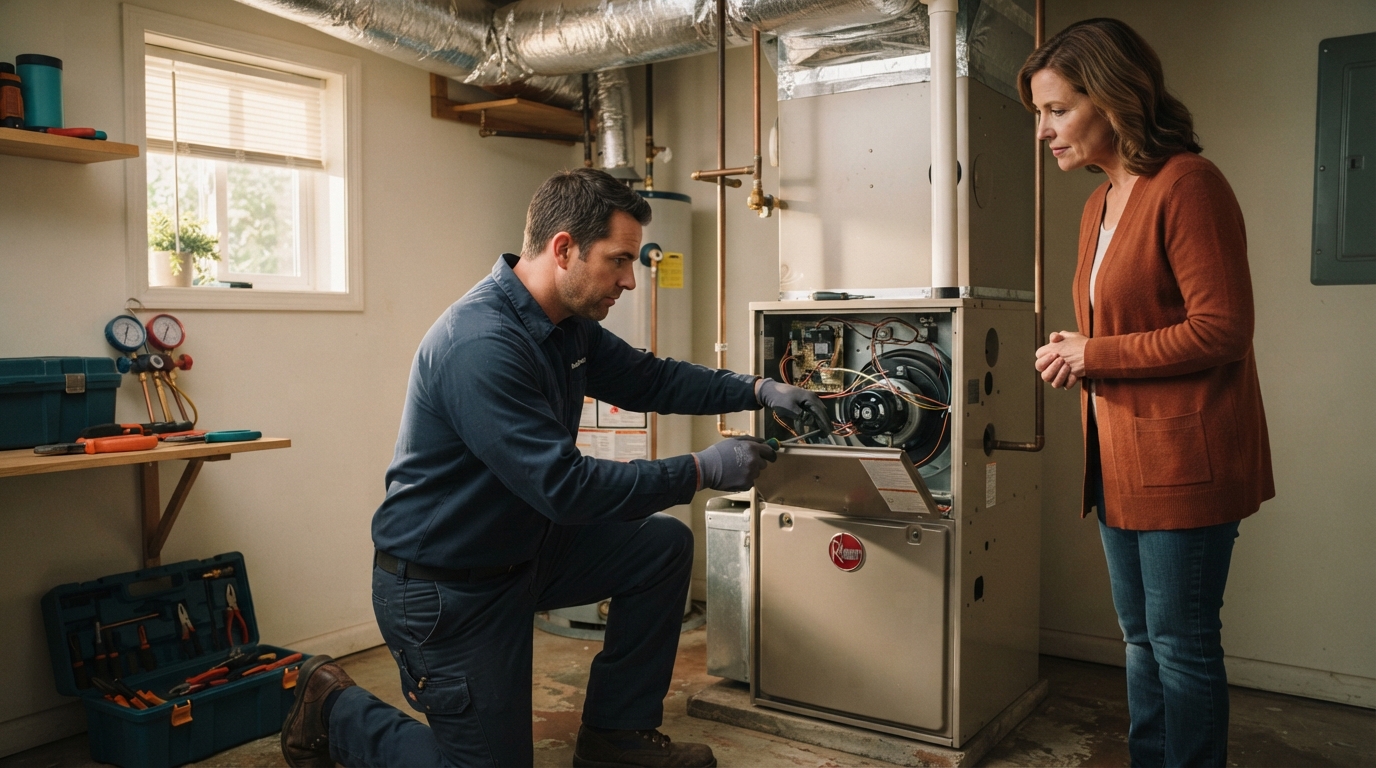
Most AC repairs cost between $150 and $650 in 2026, with a national average near $350. Minor fixes like a capacitor run $100–$250; refrigerant recharges run $200–$600; a compressor or coil replacement can reach $1,300–$2,800 — the point where replacing the unit often makes more sense.
| Item | Typical installed cost |
|---|---|
| Diagnostic / service call | $75 – $200 |
| Capacitor replacement | $100 – $250 |
| Contactor replacement | $120 – $300 |
| Refrigerant recharge | $200 – $600 |
| Fan motor replacement | $300 – $700 |
| Evaporator coil replacement | $650 – $2,300 |
| Compressor replacement | $1,300 – $2,800 |
AC repair cost snapshot for 2026
A broken air conditioner never picks a convenient time to fail. Before you call anyone, it helps to know what a fair price actually looks like, what changes it, and when a repair bill signals that replacement is the smarter move.
Most homeowners pay between $150 and $650 for a typical AC repair in 2026, with the national average sitting close to $350. Where you land in that range depends heavily on what actually broke — a failed capacitor is one of the cheapest fixes on the list, while a compromised compressor sits at the opposite end and often costs enough that replacing the whole outdoor unit starts to make more financial sense than fixing it.
This guide also covers how your region and equipment age affect the final invoice, how DIY fixes compare to hiring a licensed technician, and how the 2026 shift toward A2L refrigerants is nudging some repair costs upward this year.
AC repair cost by repair type
Notice how much distance sits between a contactor swap and a compressor replacement in the table above. That gap is exactly why it pays to get a written diagnosis before authorizing any repair over a few hundred dollars.
Most companies apply the diagnostic fee toward the repair itself if you move forward with their quote, so it is rarely money lost. If you're weighing this against buying new equipment entirely, our HVAC replacement cost guide breaks down full-system pricing for comparison.
Regional price variations in AC repair cost
National averages are a starting point, not a promise. Where you live changes labor rates, permit requirements, and even how often technicians see certain failures.
- Hot, humid climates (South, Gulf Coast, Southwest): AC units run longer hours for more months of the year, so components like capacitors, contactors, and coils wear out faster. Repair volume is high, which can keep prices competitive, but emergency calls during peak summer heat waves often carry the steepest premiums.
- Northeast and Midwest: Cooling season is shorter, so repair frequency is lower, but labor rates in metro areas like Boston, New York, and Chicago tend to run higher than the national average.
- West Coast metro areas: Higher cost of living translates directly into higher hourly labor rates, even for straightforward jobs like a capacitor swap.
- Rural areas nationwide: Fewer competing contractors and longer travel distances can add a trip charge, even if the repair itself is simple.
What affects AC repair cost
Two identical-looking repairs can cost very different amounts depending on a handful of variables. If you're comparing quotes across a metro area, checking a few contractors through our HVAC contractor directory is a fast way to see whether your quote is in line with what neighbors are paying.
- Age of the system: Older units (10 years or more) often need parts that are harder to source, which can add both cost and wait time. Aging systems also tend to have compounding issues — fixing a fan motor on a 12-year-old unit sometimes exposes a failing coil that was masking the real problem. See our HVAC component lifespan guide for how long each part typically lasts.
- Brand and parts availability: Premium and less common brands sometimes require proprietary parts that cost more and take longer to arrive than parts for mainstream manufacturers — this is less about brand quality and more about how widely stocked the components are at local supply houses.
- Refrigerant type: The industry-wide move to A2L refrigerants means newer systems require refrigerant that is more expensive per pound and, in some cases, specialized handling equipment and safety sensors. Systems still running R-410A have more stable refrigerant costs today, but availability is expected to tighten as manufacturers phase it out.
- Labor rates: Labor typically makes up 40% to 60% of a repair invoice. Rates vary by region, by whether the visit happens during business hours, and by the technician's certification level — refrigerant work legally requires a licensed technician.
Repair vs. replace: a decision guide
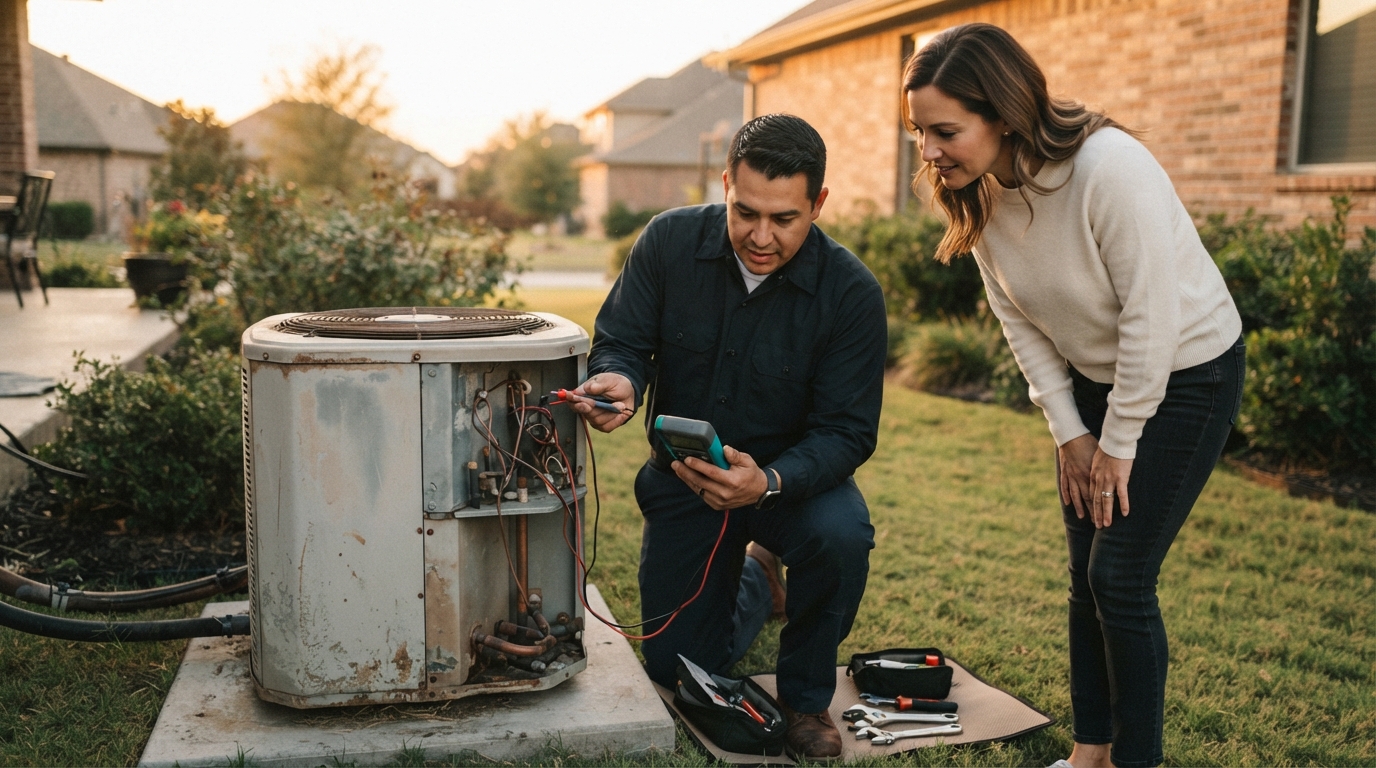
This is the question that matters most once a repair quote lands over $1,000. Factor in efficiency gains: a new, higher-SEER2 system can meaningfully lower your monthly cooling bills, which chips away at the replacement cost over time — our SEER2 savings comparison shows how much a more efficient unit saves in hot climates specifically.
Consider the refrigerant transition: if your current system runs on R-410A and needs a major repair, it's worth asking whether investing in a system that already meets 2026 A2L standards makes more sense than repairing equipment that's approaching the end of its supported refrigerant cycle. Our A2L and incentives guide covers this transition in detail, including which rebates can offset the cost of new equipment.
Full HVAC replacement (furnace plus AC) typically runs $5,000 to $12,500 without new ductwork, or $7,000 to $16,000 with it, according to our HVAC replacement cost breakdown. Comparing that range against a $2,000-plus compressor repair on a 12-year-old unit usually makes the decision clear.
Tasks reasonable to DIY
It's tempting to search for a tutorial and fix a problem yourself, especially for something that looks simple. Some tasks genuinely are DIY-friendly:
- Replacing or cleaning air filters (cost: $10–$30 in filters, done every 1–3 months)
- Clearing debris from around the outdoor condenser unit
- Resetting a tripped breaker (if it trips again immediately, that's a sign of a bigger issue)
- Cleaning condensate drain lines with a wet/dry vacuum
Tasks better left to professionals
- Refrigerant handling: legally requires EPA Section 608 certification. DIY refrigerant work is illegal for most homeowners and can damage the compressor if done incorrectly.
- Capacitor and contactor replacement: these parts store electrical charge even when the unit is off. A $150 professional repair is far cheaper than an ER visit.
- Compressor and coil work: requires specialized tools, refrigerant recovery equipment, and often brazing skills. Mistakes here can turn a $1,500 repair into a $3,000 mistake.
- Anything under warranty: DIY repairs frequently void manufacturer warranties, which can cost far more than the repair itself if something else fails later.
Emergency and after-hours repair pricing
AC failures during a July heat wave rarely wait for business hours. Most contractors charge a premium of $100 to $300 above standard rates for nights, weekends, and holidays.
Companies that advertise 24/7 emergency service typically publish this pricing upfront, so it's worth checking before you're in a crisis and comparing rates under pressure. If you have a system approaching the end of its expected life, it's smart to line up a trusted contractor through our HVAC contractor directory before an emergency happens rather than during one.
What's included in a standard AC service call

Most contractors charge a flat diagnostic fee, typically $75 to $200, for the initial visit. This fee usually covers a visual and electrical inspection of the outdoor and indoor units, refrigerant pressure checks, testing of the capacitor, contactor, and thermostat signals, and a written explanation of the problem and a repair quote.
Most companies credit this diagnostic fee toward the repair cost if you approve the work on the spot, so it's rarely an extra expense if you move forward. For what to ask before you approve any work, see our guide to hiring an HVAC contractor.
A botched DIY refrigerant recharge can shorten a compressor's lifespan and turn a $400 fix into a $2,000 replacement within a year or two. Professional labor rates reflect training, licensing, and liability that a tutorial video can't replace.
If a repair quote crosses roughly half of what a new AC unit would cost, and the system is already past the 10-year mark, replacement is usually the better financial move.
Example: a 12-year-old system needs a $2,400 compressor replacement. A comparable new AC unit runs about $4,500 installed. $2,400 ÷ $4,500 ≈ 53% — over the 50% threshold, so replacing the unit is likely the smarter long-term choice.
Frequently asked questions
Why is my AC blowing warm air?
The most common culprits are low refrigerant, a tripped breaker, a dirty condenser coil, or a failed capacitor. A standard diagnostic visit can usually pinpoint the exact cause within an hour.
How much does an emergency AC repair cost?
Expect to pay $100 to $300 above standard daytime rates for nights, weekends, and holidays. Contractors offering 24/7 service typically list their emergency pricing on their website.
Is it worth repairing a 15-year-old AC unit?
Generally, no, if the repair costs more than half the price of a comparable new system. At 15 years, most units are near or past their expected lifespan, and parts availability tends to shrink, driving repair costs even higher.
How much does it cost to add refrigerant to an AC unit?
A refrigerant recharge typically costs $200 to $600, depending on how much refrigerant your system needs and whether it uses R-410A or a newer A2L refrigerant. Keep in mind that low refrigerant almost always signals a leak somewhere in the system, so a recharge alone may not solve the underlying issue.
Does homeowner's insurance cover AC repair?
Typically only if the damage resulted from a covered event like a lightning strike, fire, or storm damage. Routine mechanical failure from age or wear is generally not covered.
How long does a typical AC repair take?
Simple repairs like a capacitor or contactor replacement usually take under an hour once diagnosed. Coil or compressor replacements can take a half day to a full day, sometimes longer if parts need to be ordered.
Should I get a second opinion on a large repair quote?
Yes, especially for anything quoted over $1,000. A second opinion costs another diagnostic fee but can save significantly more if the first quote was inflated or missed a cheaper fix.
How much should AC repair cost based on the type and age of the system?
By repair type in 2026: a diagnostic call is $75–$200, a capacitor $100–$250, a contactor $120–$300, a refrigerant recharge $200–$600, a fan motor $300–$700, an evaporator coil $650–$2,300 and a compressor $1,300–$2,800. Age changes the decision more than the price: on a system over 10 years old, a repair costing more than half the price of a comparable new unit usually means replacement is the better value.
Which regional factors can affect the price of an AC repair?
Four things move the price by region. In hot, humid climates such as the South, Gulf Coast and Southwest, systems run more hours a year so parts wear faster and peak-summer emergency calls carry the steepest premiums. In the Northeast and Midwest the cooling season is shorter but metro labour rates run above the national average. West Coast metros pay higher hourly rates because of cost of living. Rural areas anywhere can add a trip charge for travel distance, even on a simple repair.
Ready to get quotes?
Find rated HVAC contractors near you and compare a few before you commit.
Find a local pro →