2026 HVAC Costs: A2L Refrigerants, Tax Credits & What to Expect
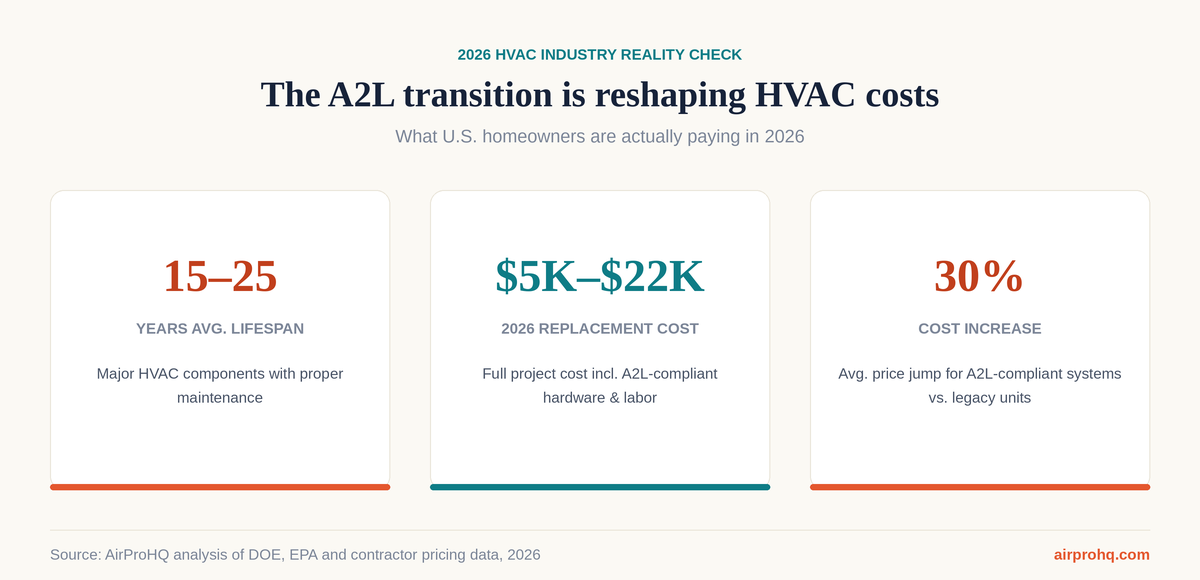
National 2026 snapshot: lifespan, replacement cost, and the A2L-driven cost increase.
The HVAC industry hit a major shift in 2026: the EPA phase-down of R-410A refrigerant means nearly all new systems now use A2L refrigerants (R-454B or R-32), pushing equipment costs up roughly 30% versus legacy units. A full replacement now runs $5,000–$22,000 depending on system type. Federal tax credits (up to $2,000 via 25C) and rebates (up to $8,000 via HEEHRA) can offset a meaningful part of that increase.
The 2026 HVAC reality check
As of July 2026, the HVAC industry is navigating its biggest shift in decades. The phase-out of R-410A refrigerant in favor of mildly-flammable A2L refrigerants (R-454B and R-32) has changed the rules on maintenance and replacement costs. AirProHQ tracks these shifts so homeowners are not caught off guard by rising equipment costs or a shortened system lifespan from improper installation.
Typical range for major components with proper maintenance.
2026 total project cost including hardware, labor and new safety sensors.
Average price jump for A2L-compliant systems vs. legacy units.
For a full year-by-year breakdown of how long each HVAC component actually lasts, see our component lifespan guide — this article focuses on what is driving 2026 pricing and how to offset it.
The A2L factor: why costs are climbing
- Leak-detection sensors: mandatory in new systems to detect mildly flammable A2L refrigerants, adding roughly $500–$1,000 to equipment cost.
- Mitigation boards: electronic controllers that automatically shut the system down and run the blower if a leak is detected.
- Upgraded service tools: technicians now need specialized, spark-proof gauges to safely service 2026-era units.
As of 2026, EPA regulations have restricted production of R-410A. Nearly all new systems now use A2L refrigerants, which require specialized leak-detection sensors and handling equipment.
It used to be common to replace just the outdoor AC unit while keeping the existing indoor furnace or coil. In 2026, that kind of partial replacement is largely gone. A2L refrigerants run at higher pressures and need specific lubricants — mixing an old coil with a new condenser voids the warranty and can cause the system to fail within months.
2026 replacement cost estimates
Labor shortages and material costs continue to drive pricing. Below are national averages for full installations at current 2026 market rates — for a full component-by-component breakdown, see our HVAC replacement cost guide.
Includes outdoor unit, indoor coil, furnace and basic duct modifications.
Before federal tax credits. High-efficiency cold-climate models can exceed $20,000.
Servicing a leak on an R-454B system now runs 20–30% more than legacy R-410A.
Legacy system warning (R-410A)
A system installed between 2010 and 2024 most likely uses R-410A. Recharging these systems has seen a 40–70% price spike as the supply of the old refrigerant is legally restricted. In some cases an AC repair involving refrigerant can cost nearly as much as a down payment on a new system.
Reducing the burden: tax credits and rebates
Equipment costs are higher, but the federal Inflation Reduction Act (IRA) provides meaningful relief for homeowners upgrading to high-efficiency systems in 2026.
- 25C tax credit: claim 30% of project cost, capped at $2,000 a year for heat pumps or $600 for high-efficiency central AC.
- HEEHRA rebates: depending on state and household income, point-of-sale rebates of up to $8,000 may be available.
- Utility incentives: many local providers in markets like Houston or Galveston offer $500–$1,500 rebates for SEER2 ratings of 17.0+.
Our methodology
This guide is compiled from four sources, kept current for the 2026 market:
- Department of Energy (DOE): 2026 efficiency mandates and A2L transition guidelines.
- EPA: refrigerant phase-down schedules.
- Contractor survey data: pricing gathered from our directory of Texas HVAC contractors and national partners.
- Manufacturer pricing: MSRP shifts from major brands including Trane, Carrier and Rheem for A2L-compliant hardware.
Frequently asked questions
Is my old R-410A system illegal to use in 2026?
No. You can keep using and maintaining your existing system. The cost of R-410A refrigerant for repairs will keep rising as supply is phased out, and if a major component like the compressor fails, replacement usually becomes the only viable option.
What is a SEER2 rating and why does it matter for cost?
SEER2 is the current efficiency standard. Systems with higher SEER2 ratings (18+) cost more upfront but qualify for larger federal tax credits and have the lowest monthly running costs.
Can I just replace my evaporator coil with an A2L-ready one?
Usually not. Because the new refrigerants behave differently, the indoor coil and outdoor condenser need to be matched, so most 2026 installations require a full system change-out for safety and warranty compliance.
How do I find a contractor who knows how to handle A2L refrigerants?
Look for technicians with updated EPA Section 608 certification that covers A2L handling. Our hiring guide has a checklist of questions to ask before signing a contract.
Ready to get quotes?
Find rated HVAC contractors near you and compare a few before you commit.
Find a local pro →